Table of Contents
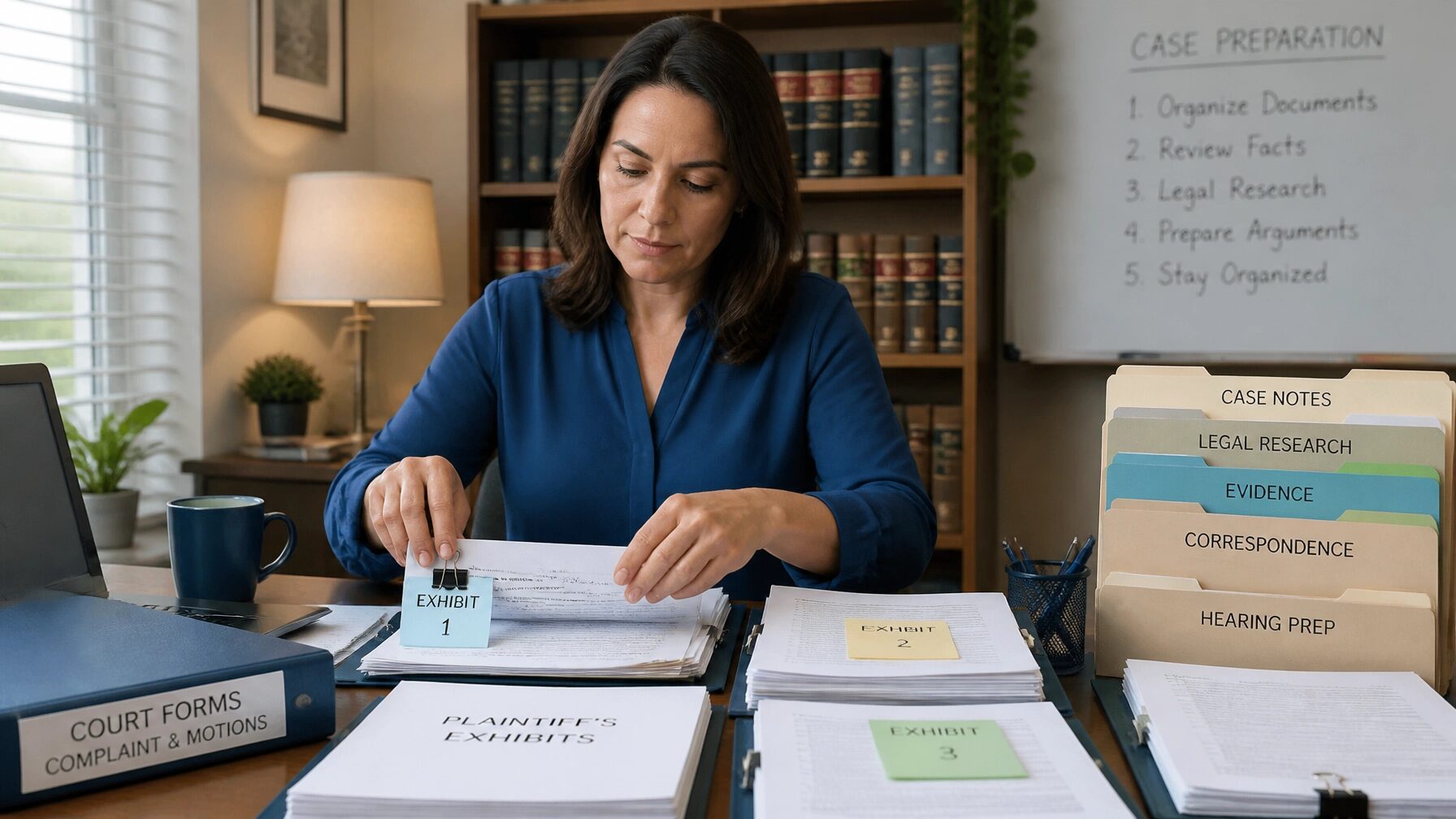
Evidence is the heartbeat of your legal case; without it, your claims are merely stories. In the courtroom, it doesn’t matter what you know happened: it only matters what you can prove through admissible documentation and testimony. For the self-represented litigant, understanding the technical rules for admitting a document into the record is often the difference between winning and losing.
If you are representing yourself, you must move beyond simply handing a stack of papers to a judge. You must navigate the complex gatekeeping rules designed to ensure only reliable, authentic, and relevant information enters the court’s consideration. This guide will walk you through the procedural steps to ensure your evidence is heard and admitted.
Understanding the Threshold of Court Evidence Admissibility
Before a judge allows a document to be “admitted,” it must pass several legal hurdles. The first hurdle is relevance. Under the Federal Rules of Evidence (and most state equivalents), information is relevant if it has any tendency to make a fact more or less probable than it would be without the information. However, relevance is just the beginning.
Many pro se litigants assume that because a document is “important,” it is automatically admissible. This is a dangerous misconception. To move your evidence from your briefcase to the judge’s desk, you must also address authentication and overcome hearsay objections. Think of the rules of evidence as a series of filters; your document must pass through every single one before it becomes part of the official record.
How to Authenticate Your Court Evidence
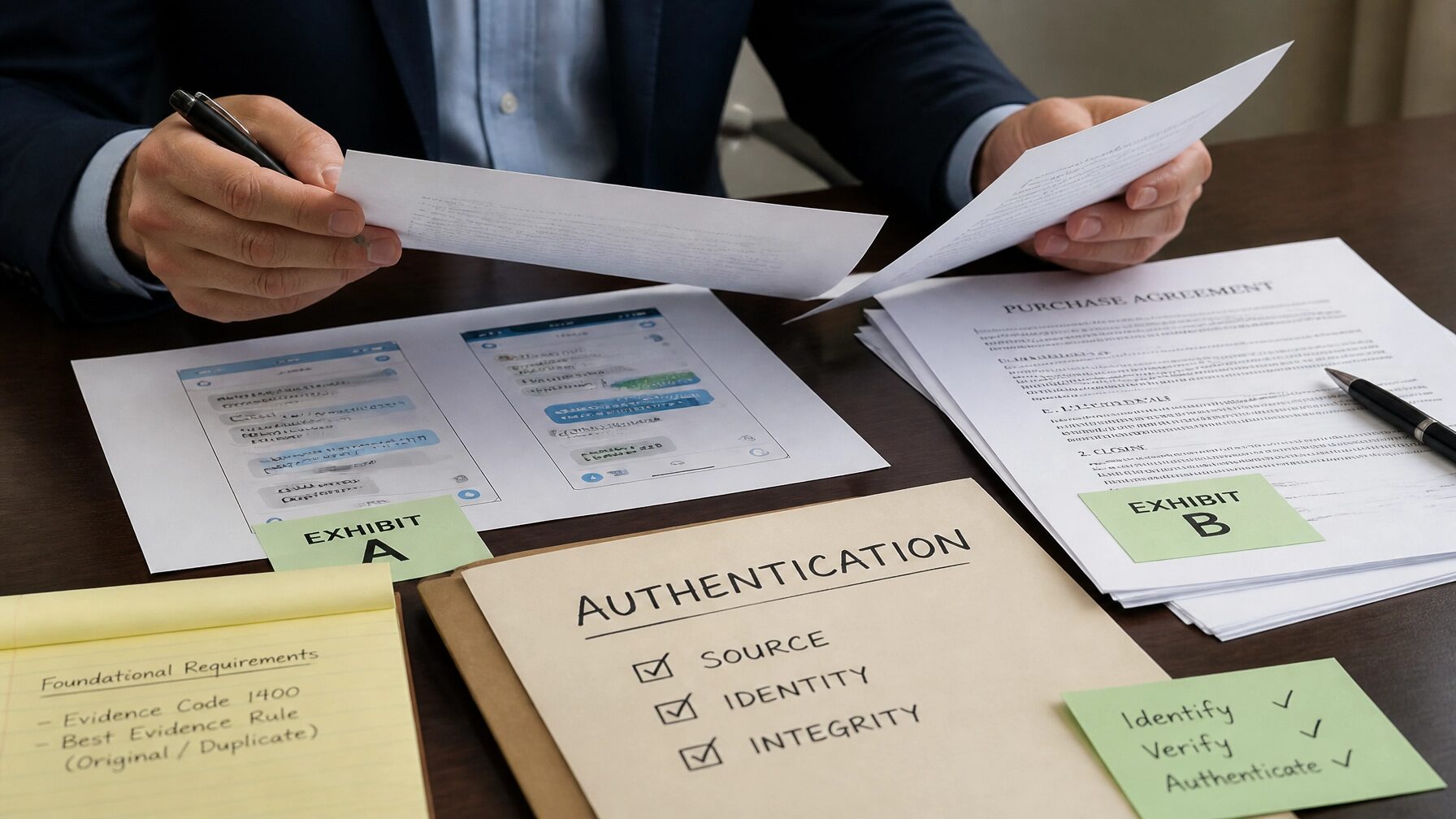
Authentication is the process of proving that a document is exactly what you claim it is. If you are presenting a contract, you must prove it is the actual contract signed by the parties. If you are presenting a text message, you must prove who sent it and when. Without authentication, the court cannot trust the evidence.
The Four Golden Questions of Foundation
In most courtrooms, you lay the “foundation” for a document by asking a witness (or yourself, if you are testifying) a specific series of questions. These four questions address nearly 80% of foundational requirements:
- Recognition: “Do you recognize what has been marked for identification as Exhibit A?”
- Identification: “What is this document?”
- Authentication: “How do you recognize it?” (e.g., “I signed it,” or “I received this email at my work address.”)
- Accuracy: “Is this a true and accurate copy of the original?”
If you can answer these clearly, you have successfully laid the foundation. For more help on the early stages of your case, see our Pleadings 101 guide.
The Step-by-Step Court Procedure in the Courtroom
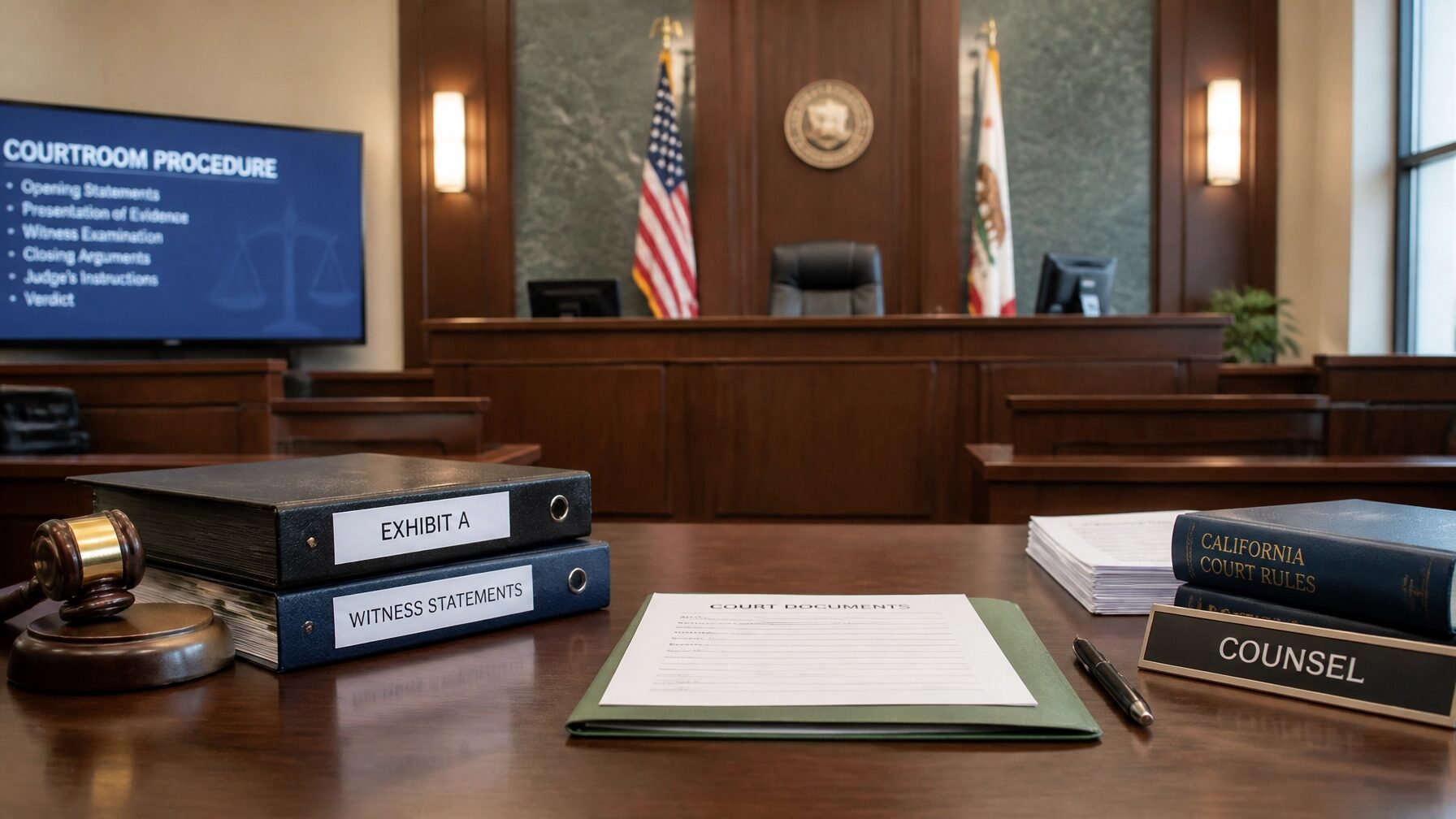
Admitting evidence follows a specific rhythm. Disrupting this rhythm can lead to objections from the opposing side or frustration from the judge. Follow these steps for every document you want the court to consider:
- Mark the Exhibit: Before the hearing starts, you should have your documents pre-marked with exhibit stickers (e.g., “Plaintiff’s Exhibit 1”).
- Show Opposing Counsel: You must show the document to the other side before you show it to the witness or the judge. This gives them a chance to prepare an objection.
- Request Permission to Approach: In many formal courtrooms, you must ask, “Your Honor, may I approach the witness?” before handing them the document.
- Identify the Document: Ask the witness the four golden questions mentioned above.
- The Formal Offer: This is the step most people forget. You must say: “Your Honor, I move to admit Exhibit 1 into evidence.”
The judge will then ask the opposing side if they have any objections. If the judge says “Admitted,” your document is now part of the record. If you are struggling with the pre-trial phase, our Discovery Guide can help you gather the right materials early.
Overcoming the Court Hearsay Hurdle
The most common reason evidence is excluded is the “Hearsay” rule. Hearsay is an out-of-court statement offered to prove the truth of the matter asserted. In plain English: if you are trying to use a letter someone else wrote to prove what happened, it is likely hearsay.
However, there are many exceptions to the hearsay rule that you can use to get your documents admitted:
- Business Records: If a document was created in the regular course of business (like a bank statement), it may be admissible if you have a “Custodian of Records” affidavit.
- Party-Opponent Admissions: Anything the other side said or wrote is generally admissible against them.
- Excited Utterances: Statements made during a stressful or startling event.
- State of Mind: Using a statement to show what someone was thinking, rather than the truth of the statement itself.
Understanding these exceptions is a critical part of your Motion Drafting: 7 Mistakes You’re Making check, as you need to know which facts you can actually prove in your motions.
Common Court Mistakes and How to Avoid Them
Navigating evidence rules is difficult, and even seasoned attorneys make mistakes. For a pro se litigant, these errors can be fatal to the case.

Using Discovery to Simplify Court Admissibility
You can often bypass the drama of the courtroom by using discovery tools. If you send a “Request for Admission” to the opposing party, you can ask them to admit that a specific document is authentic. If they admit it in writing before trial, you don’t have to go through the full authentication process in front of the judge.
This strategy saves time and reduces the risk of a technical error keeping your evidence out of the record. Always look for ways to “stipulate” (agree) to the authenticity of documents with the other side before you step into the courtroom.
Frequently Asked Questions
What if the judge refuses to admit my document?
If the judge sustains an objection and refuses to admit your document, you should ask to make an “Offer of Proof.” This allows you to explain for the record what the evidence would have shown, which is vital if you need to appeal the decision later.
Can I use printed emails or text messages as evidence?
Yes, but you must authenticate them. You generally need to show who the sender was, that the printout accurately reflects the digital original, and that the messages have not been altered. Screenshot “chains” that show the full context are usually more effective than single snippets.
What is the “Best Evidence Rule”?
In general, the court prefers the original document over a copy. However, modern rules often allow photocopies unless there is a genuine question about the original’s authenticity or it would be unfair to admit the copy under the circumstances.
Do I need a witness to admit every document?
Not necessarily. Some documents are “self-authenticating,” such as certified public records, newspapers, or trade inscriptions. However, most private documents (letters, contracts, photos) require a witness with personal knowledge to lay the foundation.
Conclusion: Mastery of Your Court Evidence
Winning a case requires more than just being right; it requires the procedural skill to get your court evidence admitted into the record. By understanding the steps of marking exhibits, laying a foundation, and navigating hearsay, you empower yourself to present a professional and persuasive case. Remember, the judge can only rule on what is officially admitted: make sure your voice is heard by following these rules meticulously.
Don’t let technicalities stop you from seeking justice. If you are preparing for a hearing or trial, take the time to organize your exhibits today. For more guidance on navigating the courtroom, explore our full blog archive for step-by-step strategies designed for self-represented litigants.
Let me know if you need any tweaks!
Best,
Coach
Emerald Phoenix Legal Coaching
—
” I am Not an Attorney, I can not and do not give Legal Advice”
Call us @ 307-303-3022
Click link below to Book a Call Time
and check us out at https://pro-se-coach.com
Disclaimer: This communication is for educational and entertainment purposes only and does not constitute legal advice. No attorney–client relationship is created by this email or its contents.
This email, including any attachments, is covered by the Electronic Communications Privacy Act, 18 U.S.C. §§ 2510–2521, and may contain privileged, proprietary, or confidential information protected from disclosure. It is intended solely for the use of the designated recipient(s).
Any unauthorized review, use, disclosure, distribution, or copying of this communication is strictly prohibited. If you are not the intended recipient, please notify the sender immediately by email, delete this message, and destroy any copies (including attachments).
All Rights Reserved, without recourse.